Home YouTube Shorts captions

Shorts burned in, independent of the platform

YouTube Shorts captions, in the video.

YouTube Shorts captions keep a viewer one second longer, and in a format that is watched fast and abandoned faster, that second is the whole game.

From €4.99/month · 300 minutes of video · cancel any time
Or work on the web →

YouTube Shorts captions, ready to export from Titro
why

Why YouTube Shorts captions with Titro.

01 YouTube’s auto-captions are not enough for Shorts

YouTube generates captions for long videos, but in the Shorts feed they are small, off by default on many phones, and easy to miss. Burned-in subtitles are on for everyone, at the size and position you chose.

02 Shorts and the long version from one upload

Upload the full video once. Burn subtitles into the clips you cut for Shorts, and download the .srt for the long-form upload where a subtitle file is the better choice. Same transcript, same timing, no double work.

03 Clear of the Shorts interface

Shorts stacks its buttons down the right edge and the title and channel along the bottom. Titro’s styles keep the text in the lower-middle band, and any caption can be dragged when the shot needs it.

04 Timed to the word

Every word gets its own start and end, so the highlight lands on the word being spoken. On a fast-cut Short that is the difference between text the viewer reads and text they scroll past.

steps

How to add captions to YouTube Shorts.

01

Upload

The Short from your phone, or the full video in Titro Studio on your computer. The format is kept.

02

Wait twenty seconds

The subtitles come back with the exact time of every word. Long videos take longer; the work is on our servers.

03

Style and check

Pick a style, fix any word the audio made unclear, drag the caption if it sits over something important.

04

Export

The video with subtitles inside — and the .srt for the long version, if you want it.

in practice

YouTube Shorts captions, in practice.

Burned-in or .srt: which one for YouTube

For Shorts, burned in — the feed is silent, the interface is crowded, and the text has to be there at full size. For the long-form video, an .srt uploaded in YouTube Studio is usually better: viewers can turn it off, YouTube indexes the text, and you can add more languages later. Titro gives you both from the same project; the format itself — cue lengths, speaker names, where it opens — is on the SRT file generator page.

Making several Shorts from one video

A ten-minute video usually has three or four moments that stand alone. Upload it once, cut the clips inside the project, and each one exports with its own subtitles already timed. Titro also finds the long pauses and filler words and cuts them, so the clips get tighter without a re-edit. For a whole episode, start from podcast subtitles; the same clips repost to TikTok and Reels untouched.

YouTube Shorts captions in another language

Translate the subtitles between English, German and Albanian with one click to reach an audience that doesn’t speak the video’s language. Translated minutes count double.

The Shorts frame, measured

Shorts borrows TikTok’s layout but not its measurements. The right edge carries like, comment, share and remix in a column; the bottom carries the title, the channel and the audio line; and on many phones the system’s own gesture bar takes a little more. The dependable band is the lower middle, and Titro’s styles start there. Line length matters more on Shorts than anywhere else because the format is fast-cut and the text competes with the cut rhythm: set two or three words per line at upload, and where a cut lands mid-sentence, split the line in the editor so the text changes with the picture instead of across it. Boxed styles earn their keep here too — Shorts footage is often bright and busy, and an outline alone washes out.

Shorts as the front door of the channel

For most channels Shorts are discovery and the long video is the destination, and that order of work favours one upload. Process the full video first, download the .srt for the long-form upload — viewers can switch those captions off, and YouTube indexes the text — then cut the Shorts from the same timed transcript and burn their captions in. The alternative, captioning each Short separately after the fact, re-spends the same minutes and drifts the look between clips. One project keeps the timing, the speaker names and the style identical across everything the episode becomes.


questions

What you should know.

Can I download the subtitles as a file for YouTube?

Yes. Every project exports as .srt, with speaker names if there are several, ready for YouTube Studio.

Does the export lose quality?

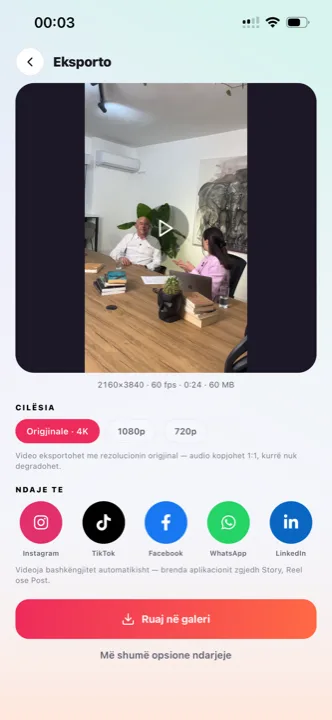
No. The original resolution and the audio are kept as they are. Only the subtitles are added.

Does it work for horizontal YouTube videos too?

Yes. Any format, up to 60 minutes on Creator and 180 on Studio.

Can it cut pauses and filler words?

Yes, with one tap. Titro shows how many seconds you’d save before it cuts, then retimes the subtitles. Undo whenever you like.

Does it tell speakers apart?

Yes. Choose “more than one voice” at upload and each speaker gets a name and a colour, in the video and in the .srt.

Should I turn off YouTube’s captions on a Short with burned-in text?

In the Shorts feed, YouTube’s captions are off by default on most phones, so overlap is rare. But if you upload an .srt to the same video, a viewer who enables captions could see both layers — for Shorts, burned-in alone is the clean setup, and the .srt belongs on the long-form upload.

Do captions affect how Shorts are recommended?

Shorts are ranked on viewer behaviour — watched through, rewatched, swiped away. Captions keep the muted viewer, which most Shorts viewers are, and that retention is the input the system reads. The effect is indirect, but it points one way — and burned-in text survives the download-and-repost loop intact.

also

Subtitles for everywhere you post.

Try it on your next video.

Upload it now and see it finished before your coffee’s done.

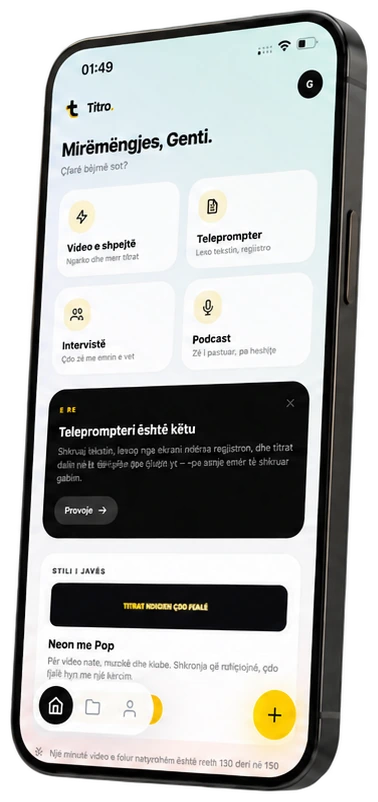
Titro on a phone, showing the home screen and subtitle tools