Where to put the subtitles in the frame
Every feed covers part of the picture with its own interface. TikTok fills the bottom right with the description and icons; Instagram covers roughly the bottom 15%; Shorts adds a column of buttons on the right. The safe area on all three is the lower-middle band, above the description. Titro’s styles start there, and any caption can be dragged elsewhere when the shot needs it. The platform-by-platform detail is on TikTok captions, Reels captions and Shorts captions.
How many words per line
On a phone screen, two or three words at a time read faster and hide less of the picture. Long lines look like a film subtitle and slow the video down. Choose the line length at upload; you can still split and merge lines afterwards.
Fonts, size and contrast
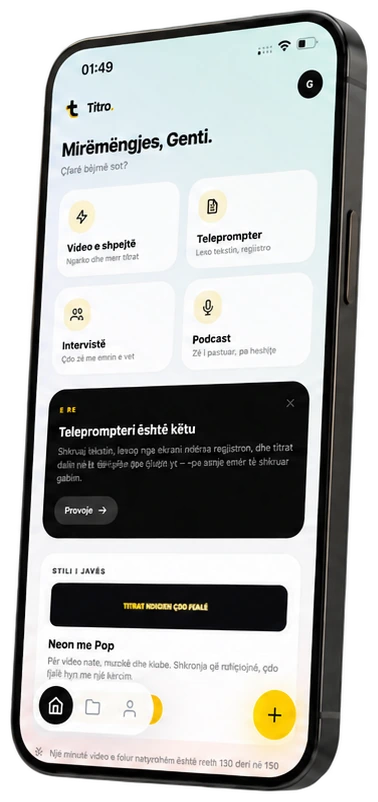
Bold sans-serif fonts with a box or a thick outline survive bright, busy footage; thin text on a sunny beach does not. Titro renders every caption in the editor exactly as it will be burned, so what you see on the timeline is what the viewer gets.
Doing it on the platform instead
Every platform will also caption for you, and for a one-off post that can be enough. The trade-offs — captions that disappear on repost, weak accuracy outside English — are walked through for TikTok on how to add captions on TikTok and for Facebook on captions for Facebook video. If you caption inside CapCut today, the usage cap free accounts report and the common failures are covered on CapCut auto captions. And if you are deciding whether the work is worth doing at all, the argument — muted feeds, retention, search — is laid out on why subtitles matter.
Subtitles in a second language
Titro listens in English, German and Albanian — including Gheg and Tosk Albanian — and handles sentences that switch language halfway through. If part of the audience speaks another of the three, translate the subtitles with one click and export a second version; translated minutes count double. For a longer recording where the transcript itself is the point, start from transcribe video to text — the same project yields the subtitles, the translation and the .srt file.
A thirty-second check before you export
Read the subtitles through once, out loud if the video matters — names, numbers and brand terms are where recognition slips, and each fix is a tap. Scrub to the busiest shot and check the caption still clears faces, logos and the platform’s interface; drag it if not. If the footage is bright or high-contrast, switch to a boxed style rather than shrinking the text. And check the first caption on screen: it should be a sentence worth staying for, because most viewers meet it with the sound off. The whole pass takes less time than the upload did, and it is the difference between subtitles that read as part of the video and subtitles that read as something a tool added.